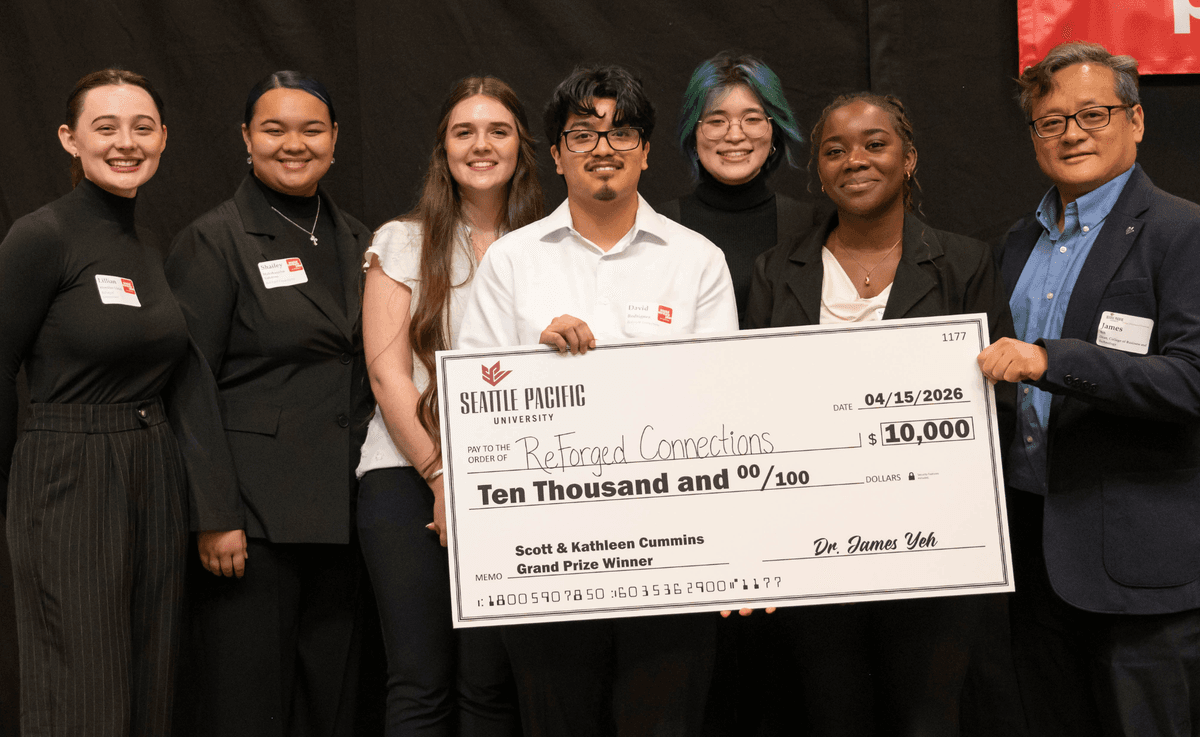

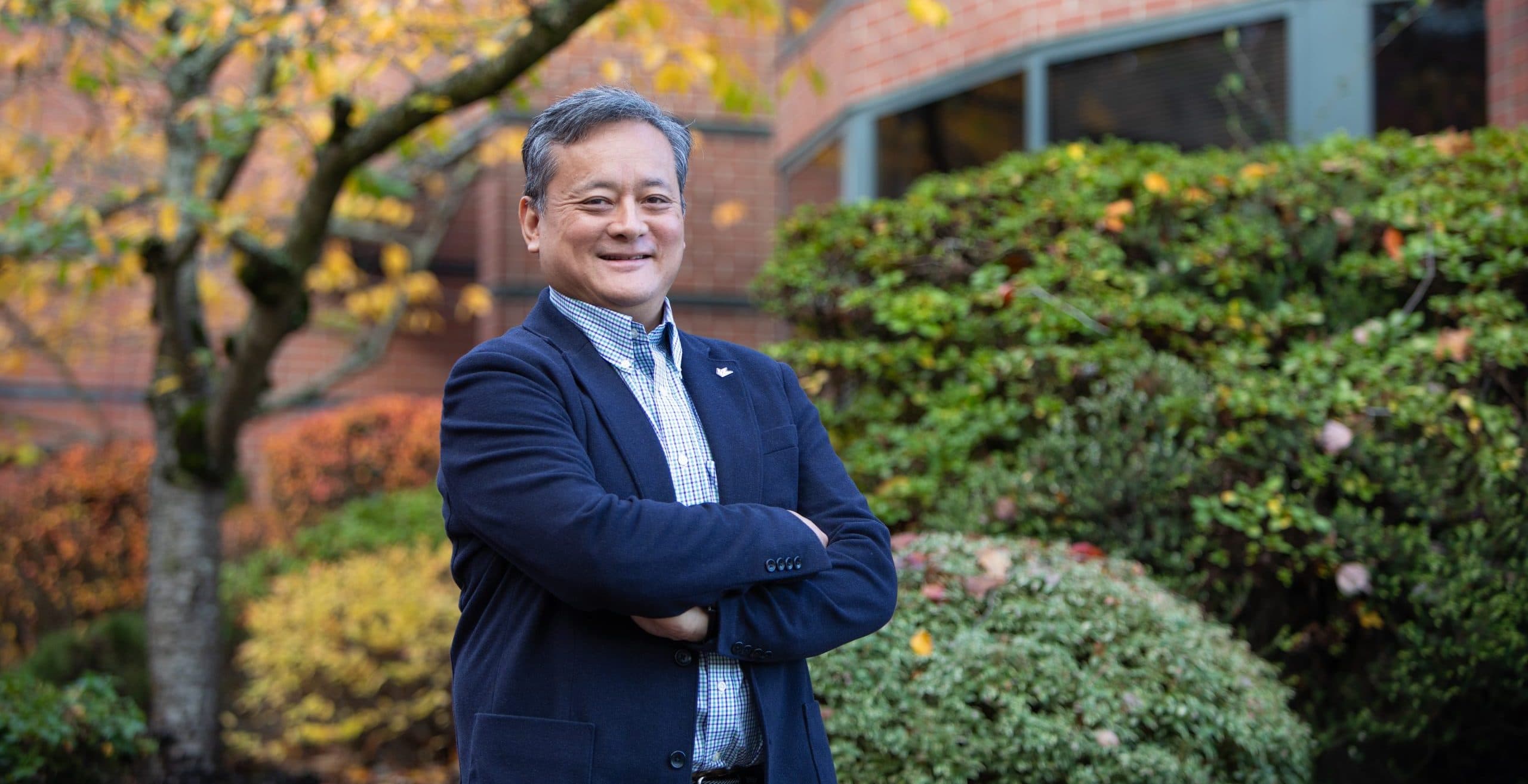
Dr. James Yeh shares his vision for SPU’s new College of Business and Technology.
Even though Seattle Pacific University’s new dean of the College of Business and Technology (CBT) spent more than two decades building an impressive resume in high-tech, including obtaining seven U.S. patents, Dr. James Yeh continued to feel drawn to higher education — wanting to bridge innovation with practical application.
Ten years ago, he left industry for Azusa Pacific University, becoming chair and associate professor of engineering and computer science. He later served as inaugural associate dean of the School of Engineering at Massachusetts Maritime Academy before joining SPU in September 2025.
“I found that I really liked teaching students; helping them form and develop both technically and also in their faith—to live a life worthy of their calling,” says Yeh.
Teaching students to work and lead with integrity is a primary focus for Yeh as he steps into leading the College of Business and Technology. When he worked as a professor, he typically taught using real-world examples of situations in which companies acted dishonestly in order to prioritize profit. Yeh wanted to provide relevant issues that arise in the workplace as a way to help prepare students for the difficult choices they might have to make someday.
“[Many businesses] have gone too far in only focusing on profit and shareholder value at the expense of workers, of society, and of the benefits they could bring to people,” Yeh explains. “And at a Christian university, we’re able to teach students to look beyond just shareholder value and profit. We’re able to train future leaders who will help people flourish and have firms that create value in society.”
Yeh is excited about the many ways CBT, given its prime location in a major global tech hub like Seattle, can weave together faith and hands-on learning, both inside and outside the classroom. The main mission of CBT is to “invite students to consider the connection between faith and innovation through interdisciplinary programs shaped by a Christian foundation.”
Yeh’s own faith journey began when he was a child growing up in Taiwan. He recalled that his grandmother, who was the only Christian in his family at the time, would tell him stories about Jesus. When Yeh was nine years old, his family moved to the United States and began to attend church together. Yeh explained that while there were periods in his life when he felt closer to God than at other times, he always knew that God was with him. Looking back, he can see how God’s plan has unfolded in his own life and in the lives of his family members.
Reflecting on the significance of faith during a person’s college years, Yeh says, “College is one of the most formative times in our lives. It’s where we really develop as individuals. It’s where we form our character and innermost values. Having Jesus as the center of our lives at this time really sets us up for a life of integrity and resilience. Later on, you will have challenges in your life, but with that faith as your foundation, you’re going to be able to get through it.”